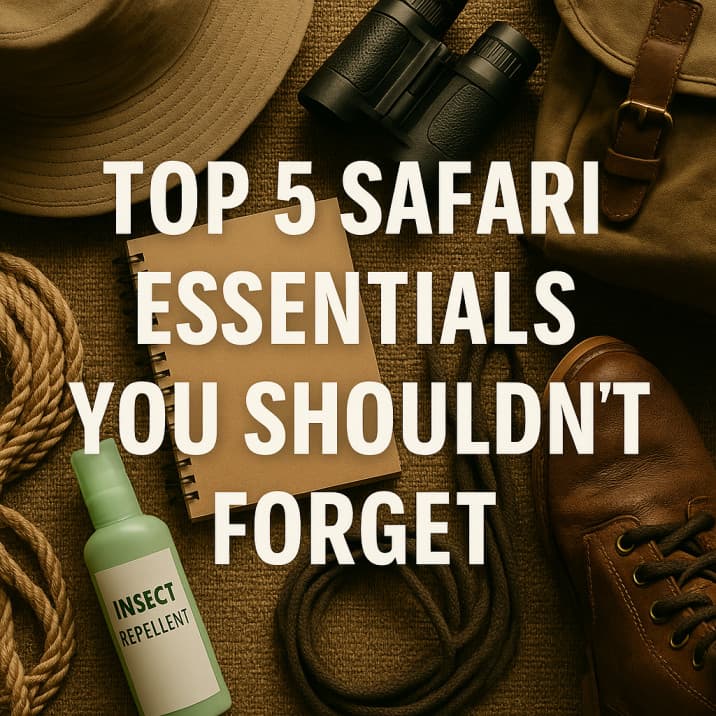
Packing for a safari can quickly become a shopping expedition of its own.
One minute you are looking for a sun hat. The next, you are considering trousers with fourteen pockets and a jacket that apparently doubles as emergency accommodation.
You probably need less than you think.
A useful safari packing list starts with five things: a suitable bag, comfortable layers, sun and insect protection, binoculars, and your personal health essentials. Add your travel documents and charging kit, then adjust for your route, season and activities.
Here is how to pack for the trip you are actually taking.
1. A bag that fits your itinerary
Before choosing your luggage, find out how you will travel.
A road trip, a small-aircraft transfer and a hiking itinerary can have different baggage requirements. Your international flight allowance does not automatically apply to the next flight.
Ask your operator or airline:
- What are the weight and size limits for each journey?
- Does the allowance include hand luggage and camera equipment?
- Are soft-sided bags required?
- Can spare luggage be stored if you are returning to the same hotel?
A soft-sided duffel can be a practical choice when space is limited, but confirm the actual requirements before buying one.
Also bring a small day bag. Keep your water, extra layer, camera and other essentials within reach rather than buried beneath a week's worth of socks.
Packing tip: Lay everything out before filling the bag. It is easier to remove three unnecessary outfits from a bed than from a suitcase you are sitting on.
2. Comfortable layers, not a safari costume
You do not need an entirely new wardrobe.
Choose clothes that let you sit, walk and move comfortably. Early starts and exposed vehicles can feel cool, while conditions later in the day may be warmer. Your guide can advise on what to expect for your specific route.
A practical starting point is:
- Lightweight shirts or tops.
- Comfortable trousers.
- A long-sleeved layer.
- A fleece or light jacket.
- A rain layer if your itinerary and forecast call for one.
- Comfortable, already-worn shoes.
- A secure sun hat and sunglasses.
Muted colours such as olive, beige and brown are practical choices, particularly for guided walks. Ask about clothing requirements for any specialist activities rather than assuming one outfit suits everything.
You do not need to arrive looking like you have been appointed head ranger.
Do you need hiking boots?
Pack for the activity.
For a vehicle-based safari, comfortable closed shoes may be enough. For longer hikes or uneven trails, ask what footwear your guide recommends.
Whatever you choose, wear it before departure. The first morning of your holiday is a poor time to discover that your boots dislike you.
How many outfits should you bring?
Check whether your accommodation offers laundry and how quickly it can be returned. That answer is more useful than packing a fresh outfit for every possible photograph.
Choose pieces you can wear together and repeat comfortably.
3. Sun protection and insect repellent
Keep these in your day bag, not somewhere you will only reach after sunset.
Pack sunscreen, a hat, sunglasses and an insect repellent suitable for you. Clothing that covers your arms and legs can also help.
For sun protection, choose a broad-spectrum sunscreen and follow its application instructions. Reapply regularly, including after heavy sweating or swimming. The CDC's sun-exposure guidance also recommends protective clothing and a wide-brimmed hat.
For insect protection, the CDC recommends registered repellents, including products containing DEET or picaridin. Follow the label, including any age restrictions.
When using both products, apply sunscreen first and repellent afterward.
A scenic view is excellent. Enjoying it while sunburnt and scratching your ankles is less excellent.
4. Binoculars—and a camera setup you know
A camera records a sighting. Binoculars help you enjoy it while it is happening.
They can make distant wildlife and birds much easier to observe without asking your guide to move closer. Before buying or borrowing a pair, check whether binoculars are provided and whether they are shared.
If you bring your own, practise adjusting the focus before the trip. An exciting sighting is not the ideal moment to begin a relationship with the instruction manual.
Keep the photography kit manageable
Bring equipment you know how to use and can carry comfortably.
Remember:
- Charging cables and the appropriate plug adapter.
- Spare camera batteries, if needed.
- Enough storage space or memory cards.
- A lens cloth.
- A protective bag or cover for dust and rain.
Check your airline's current rules before packing power banks or spare batteries.
A phone can be perfectly useful for landscapes, people and the everyday moments between sightings. You do not need professional equipment to come home with photographs you love.
And occasionally, put the camera down. Some moments deserve your full attention rather than a battle with the zoom button.
5. Your personal health kit and essential documents
Pack your regular medicines and any trip-specific items recommended by your healthcare professional.
Where permitted, keep essential medication in your hand luggage in its original labelled packaging. Check destination rules for anything you carry, and plan for storage needs before departure.
A small personal kit might also include plasters, blister dressings and items you already know how to use. Ask your pharmacist or clinician what is appropriate for your circumstances.
What about malaria medication?
Do not choose malaria tablets from a generic packing list.
Advice depends on your destination, route and health history. The CDC's Kenya travel-health guidance recommends discussing vaccines and medicines with a healthcare professional before travel.
If prevention medication is prescribed, follow the instructions for when to start, continue and finish it. Packing the box is only one part of the plan.
Alongside your health essentials, keep accessible copies of your:
- Travel documents and confirmations.
- Insurance details and emergency contact number.
- Relevant prescriptions.
- Accommodation and operator contact information.
Store sensitive documents securely rather than leaving copies scattered across shared devices.
Your quick safari day-bag checklist
Before leaving for an outing, check for:
- Drinking water or a refillable bottle, with safe refills arranged.
- Sunscreen and insect repellent.
- Hat and sunglasses.
- A light extra layer.
- Binoculars, if you are bringing them.
- Phone or camera.
- Any medication you need during the day.
Ask whether meals, snacks and water are included. A “full-day excursion” describes the duration, not necessarily the catering.
What changes for a day trip or a longer safari?
For a day trip, focus on the day bag and clothing suited to the activity. You rarely need to bring your entire travel wardrobe along for the ride.
For a multi-day journey, add overnight essentials and check laundry, charging facilities and luggage arrangements.
If you are combining wildlife viewing with hiking or a coastal stay, pack for those activities too. The right question is not “What does everyone take on safari?” It is “What will I actually be doing?”
Before you zip the bag
Send your planner four details: your travel dates, route, activities and transport arrangements. Ask what is provided and what you need to bring.
That short conversation can save unnecessary shopping, excess luggage and a surprising amount of last-minute stress.
Still shaping the trip itself? Request a personalised itinerary and quote, and tell us the experiences you would love to include.
We can start with the journey. The fourteen-pocket trousers can wait.