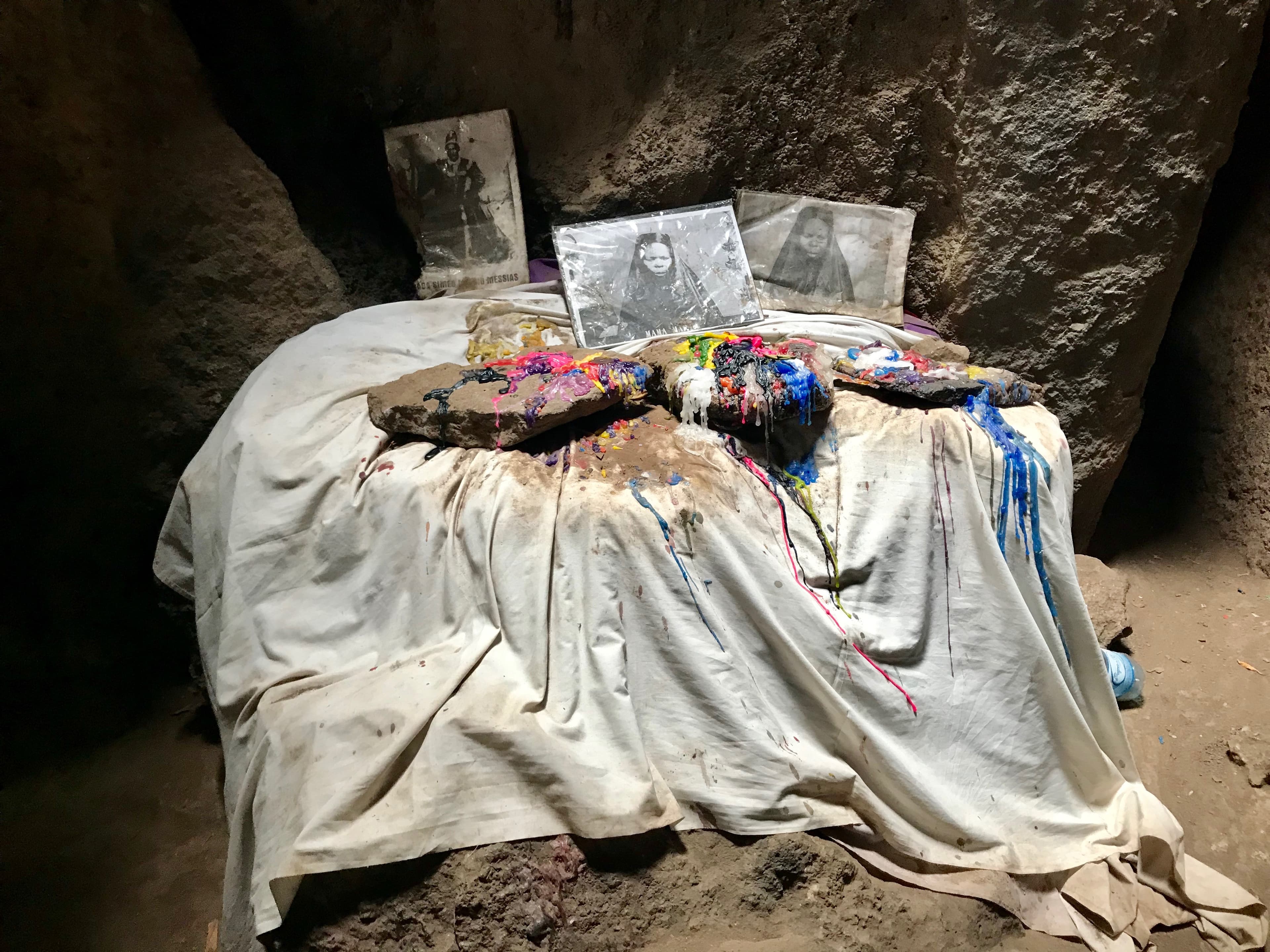
Some places make you reach for your camera. Others give you a reason to put it away and listen.
Kenya’s sacred sites invite a different kind of travel: one shaped by stories, community memory and traditions that continue beyond the visitor’s arrival.
Kit-Mikayi near Kisumu and the Mijikenda Kaya forests along the coast offer starting points for understanding that relationship between people and place. Visiting arrangements depend on the particular site and its custodians; a landmark on your map is not automatically an invitation to enter.
You do not need to share a belief to approach it respectfully. Curiosity, patience and a willingness to follow local guidance go a long way.
Kit-Mikayi: begin with the people who know its stories
Kit-Mikayi is a striking rock formation in Kisumu County, associated with Luo cultural and spiritual life. The National Museums of Kenya lists it among the region’s heritage sites.
The rocks may be what first catch your attention, but the stories surrounding them are a reason to spend time here.
For a visitor, a useful starting point is a conversation with a recognised local guide or custodian. Ask about the site’s name, its significance and the traditions they are willing to share.
Allow room for different tellings. Oral traditions can have variations, and one person’s account should not be presented as the single belief of an entire community.
What to ask before visiting Kit-Mikayi
Confirm:
- Whether visitors are being received on your intended day.
- Who will guide the visit.
- Which areas are accessible.
- Whether any worship or private activity affects access.
- What photography is permitted.
- The walking conditions and any accessibility limitations.
Do not assume that every rock surface is a climbing route or that every quiet space is available for your own activity.
The most memorable part of the visit may be a conversation you could never have found in a caption.
The Kaya forests: heritage that is still alive
Along Kenya’s coast, the sacred Mijikenda Kaya forests hold the remains of former fortified settlements.
Their significance extends beyond those physical remains. UNESCO describes them as places connected to Mijikenda identity, ancestral beliefs and living traditions, maintained through the authority of councils of elders.
The Sacred Mijikenda Kaya Forests World Heritage listing also explains how cultural restrictions have helped protect the surrounding forests.
For travellers, that connection is worth paying attention to: the landscape and its cultural meaning belong in the same conversation.
Can you visit a Kaya forest?
Ask about the specific forest you hope to visit.
A World Heritage designation does not mean every area is open to everyone. Access arrangements, permitted activities and local protocols need to be confirmed with the relevant custodians.
A visitor experience, where available, should follow their guidance. Do not treat an unmarked path as an opportunity to explore independently.
Google Maps can help with a road. It is less useful at explaining who has given permission to walk beyond it.
Let local storytellers explain the folklore
A good cultural visit leaves space for the person telling the story.
Useful questions include:
- What does this place mean to your community?
- Are there different accounts of its history or name?
- Which stories can be shared publicly?
- What would you like visitors to understand before leaving?
Listen to how the speaker frames the account. A historical event, a family memory and a spiritual tradition are different kinds of knowledge.
If you later share the story, make that distinction clear. “Our guide shared a local tradition about…” is more accurate than presenting a belief as an event you personally witnessed.
Some knowledge may be private. Accepting that boundary is part of being a welcome visitor.
Photography: ask before you raise the camera
Permission to enter does not necessarily include permission to photograph.
Ask before photographing people, ceremonies, sacred objects or restricted spaces. Check separately before recording audio or video.
A guide agreeing to a photograph does not automatically mean everyone nearby has agreed too.
If someone declines, put the camera away without trying to negotiate. There is still plenty to notice when you are not composing a shot.
For any commercial photography, filming or drone use, discuss the required permissions in advance. Do not arrive expecting an ordinary visit to cover a production schedule.
Dress and behave for the place you are visiting
There is no single dress code for every sacred site in Kenya. Ask your host or guide what is appropriate for that particular visit.
Choose comfortable clothing and footwear suited to the route. Confirm any requirements involving head coverings, footwear removal or access to particular areas before arrival.
During the visit:
- Keep your voice and phone volume low.
- Stay within the areas your host identifies.
- Leave stones, plants and other objects where they are.
- Avoid touching objects unless invited.
- Give people praying or gathering privately plenty of space.
- Ask before making an offering or joining an activity.
A quiet setting can be meaningful without needing to become the backdrop for your own ceremony.
Make sure the visit works for your hosts too
Before booking, ask who organises the experience, who guides it and how payment is arranged.
If a tour is described as community-led, request a clear explanation of what that means. Find out whether fees go to the guide, the site, a community organisation or several recipients.
Agree on charges before the visit, including any photography fees. If you would like to contribute beyond the agreed price, ask what is useful and how contributions are managed.
Respectful travel includes respecting people’s time and expertise. A conversation may feel informal while still being someone’s work.
Build the visit into a sensible itinerary
Kit-Mikayi and the coastal Kaya forests belong to different regions. They should not be squeezed into a single day because they share a theme.
If you are travelling around Kisumu, ask whether a visit to Kit-Mikayi fits your route and the site’s arrangements.
If you are staying on the coast, enquire about a locally approved Kaya forest visit near your base.
These are planning possibilities, not promises of access. Confirm the actual experience before adding it to your itinerary.
Leave enough time for introductions, questions and pauses. The point is to understand a little more, rather than race through another stop.
Questions travellers often ask
Do I need to share the community’s beliefs?
Not necessarily. Where visitors are welcomed, respectful interest can be enough. Ask what participation, if any, is appropriate, and be comfortable observing rather than joining.
Can children come?
Ask before booking. Suitability depends on the walking conditions, length of the visit, access arrangements and any activities taking place.
Explain expectations in advance, including when to be quiet and why some areas or objects should be left alone.
Can I visit without a guide?
Do not assume independent access is permitted. Check with the site’s custodians and use the guiding arrangements they approve.
Will I see a ceremony?
A cultural visit should not promise access to private worship or a ceremony unless this has been explicitly arranged and approved by those involved.
The absence of a performance does not make a visit less worthwhile. Understanding everyday meaning can be the most interesting part.
Come with questions, leave with perspective
You do not need to come away with a dramatic revelation.
Perhaps you will remember a story, a detail in the landscape or a conversation that changes how you understand the place. That is already a good reason to travel.
If cultural heritage is part of the journey you have in mind, request a personalised itinerary. Tell us the region you plan to visit, your interests and any access needs, so we can discuss what may be possible and what needs confirming.