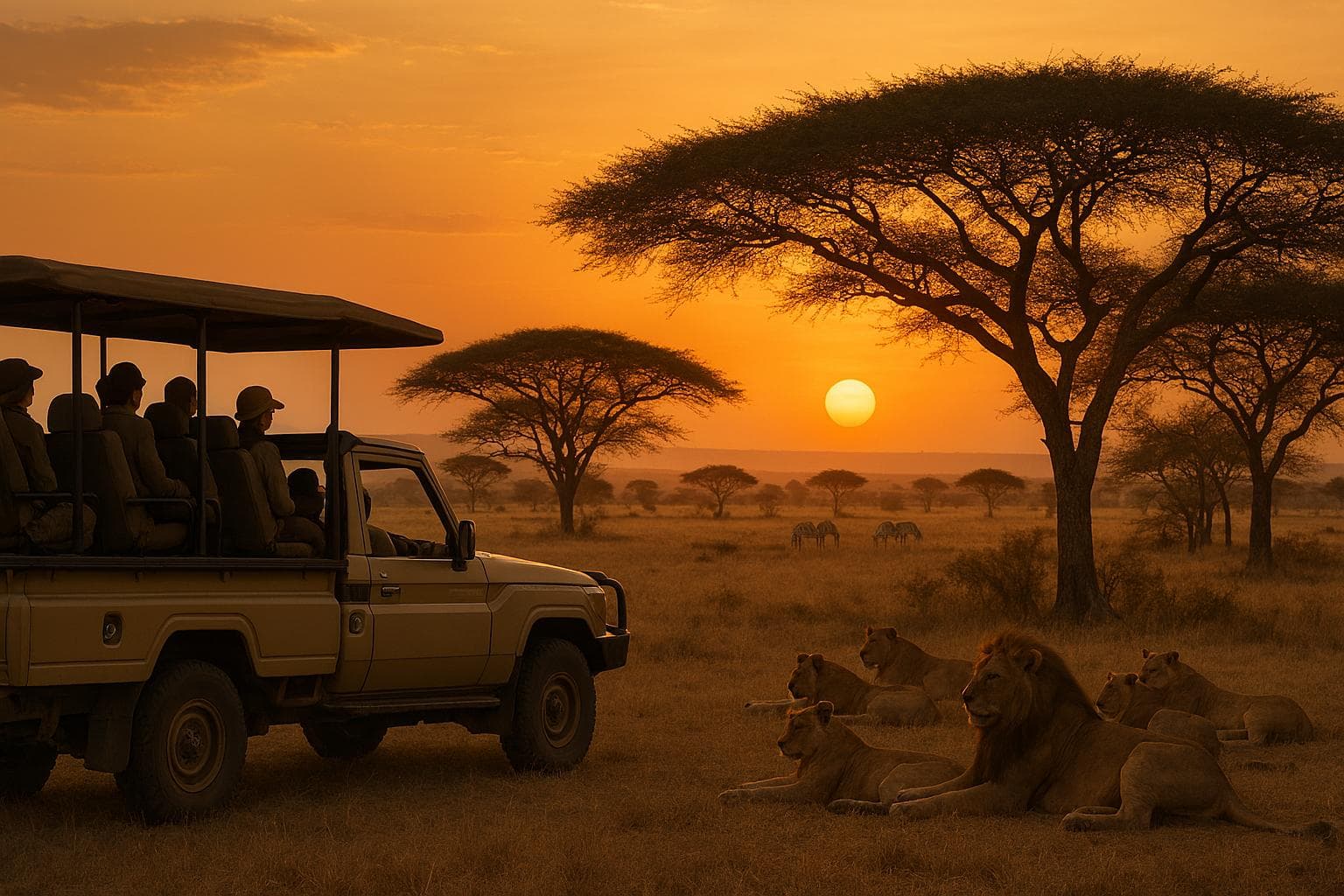
There is a moment on a multi-day safari when the itinerary stops feeling like an itinerary.
It may happen before sunrise, with a cup of tea cooling too quickly in your hands. It may happen on a quiet road as the landscape changes colour. Or it may happen after dinner, when the day’s sightings turn into stories and nobody is checking the time.
That is the quiet magic of staying longer.
A day trip can give you a wonderful introduction. A multi-day safari gives the journey room to breathe.
Day one: arriving before the adventure begins
The first day is rarely about seeing everything.
It is about leaving the city behind, settling into a new rhythm and remembering that a journey does not need to begin at full speed. There are roads to travel, views to watch and a new place to understand.
You may see wildlife. You may see nothing but a line of acacia trees and a sky that appears to have no interest in ending.
Both are part of the experience.
The best multi-day safari itineraries leave space for this arrival day. They do not expect you to become a wildlife expert, landscape photographer and professional early riser before lunch.
Day two: the landscape starts to introduce itself
By the second day, the place feels less like a postcard.
You begin to notice details: where the light falls in the morning, how quickly the weather changes, the sounds that appear when the vehicle stops. You may return to the same area and see it differently. That is the point.
Wildlife does not work to a timetable, and neither should every moment of your trip.
A longer stay gives your guide time to respond to what is happening rather than simply moving on because the schedule says so. It also gives you time to enjoy the sightings without treating each one like a task to complete.
There is no prize for seeing the most animals before breakfast. Unless you are travelling with a very competitive uncle.
Day three: choosing the pace that suits you
A safari can be active, slow or somewhere in between.
Perhaps you want early game drives and long afternoons by the pool. Perhaps you want guided walks, local stories and time to read between outings. Perhaps you are travelling with children, friends or someone who believes a 5:30 a.m. wake-up is a personal insult.
A multi-day trip lets you shape the pace around the people taking it.
This is where a personalised itinerary makes a difference. Instead of trying to fit your holiday into a fixed route, start with a few honest preferences:
- How many nights do you have?
- What do you most want to experience?
- How much time do you want in the vehicle?
- Do you prefer one wildlife area or several different places?
- Would you like culture, coast or adventure alongside a safari?
The answers are more useful than a long list of destinations.
The value of staying longer in one place
Moving less can make a journey feel richer.
When you spend several nights in one area, you have time to settle in. You learn the route to your room. You recognise the trees outside it. You stop asking where the charger is and start noticing the evening sky.
There are practical benefits too:
- Less packing and unpacking.
- Fewer long transfer days.
- More flexibility if weather or road conditions change.
- More chances to return to a place at a different time of day.
- More time to rest between activities.
A good itinerary is not measured by how many hotel lobbies you pass through.
Add contrast, not just distance
A multi-day safari does not need to be wildlife every hour of every day.
A cultural visit can add a different perspective. A highland walk can change the pace. A few nights near the coast can give the journey a softer finish.
The key is to add experiences that belong together.
Ask whether each stop brings something genuinely different. Ask how long the transfer takes. Ask whether an extra night in your current location would be more enjoyable than another journey day.
Sometimes the best addition to an itinerary is not another destination. It is an unhurried morning.
A safari is also made of small moments
People often remember the headline moments: a lion in tall grass, elephants crossing a plain, the view from a ridge.
They also remember smaller things.
The first bird call outside the tent. Dusty shoes by the door. A guide explaining why the landscape looks the way it does. A laugh in the vehicle after someone spots absolutely nothing and announces it with great confidence.
These moments need time.
They do not appear in a brochure as neatly as a Big Five checklist, but they are often the parts that stay with you longest.
How many days do you need?
There is no single answer.
A three-day escape can work well for one focused wildlife area. It is a strong choice when you want a meaningful break without too much moving around.
A five-day journey gives you more time to settle into a region, enjoy several outings and leave room for the unexpected.
A seven-day or longer itinerary can combine different experiences: wildlife, culture, a slower highland stay or a coastal finish.
The right number of days depends on your arrival schedule, budget, interests and appetite for travel days. Tell us what you have in mind, and we can help you compare realistic options.
Start with a feeling, then build the route
You do not need to know every park, lodge or transfer before getting in touch.
Start with the feeling you want from the trip.
Do you want to feel immersed in wildlife? Rested? Challenged? Connected to local stories? Ready to do very little near the ocean after several early starts?
From there, we can build a journey with enough room for the best parts to happen.
Request your personalised multi-day safari itinerary and quote.
Your next horizon does not need to be rushed.