The Aberdares have a way of changing the conversation.
You arrive talking about summit photographs. A little later, you are discussing cloud cover, the usefulness of your waterproof jacket and whether the snacks are in an accessible pocket.
This is part of the appeal.
Kenya’s central highlands offer a different rhythm from a classic savannah safari: forest, bamboo, open moorland and mountain landscapes that reward time outdoors.
But an enjoyable Aberdare hiking trip starts with choosing the right outing. A summit objective, a shorter guided walk and a relaxed highland stay are different experiences—not interchangeable versions of the same package.
This guide will help you ask the right questions before booking. It is a planning guide, rather than a set of navigation instructions.
First, decide what you want from the day
Before choosing a peak, think about the experience you want.
Are you looking for a demanding physical challenge? A photography outing with time to stop? A forest walk followed by a comfortable evening? Or a few days away with a mixture of activities?
There is no prize for choosing the hardest option and quietly disliking most of it.
Consider:
- Your recent walking experience.
- How you feel about several hours on uneven ground.
- Your previous experience at altitude.
- Whether you want a day trip or an overnight stay.
- How much flexibility you have if conditions change.
Tell your planner what you have actually done recently. “I enjoy walking” can mean a full day on a mountain or a pleasant trip to the bakery. Both are worthwhile; they require different itineraries.
Understanding the better-known Aberdare hiking options
Names such as Elephant Hill, Kinangop and Satima often appear when researching the range. Treat them as starting points for a discussion, not enough information to book a hike.
The exact starting point, approach, elevation gain and return route matter as much as the destination.
Elephant Hill: ask about the whole day
If Elephant Hill is on your shortlist, request a complete description of the outing.
Ask how long the group should expect to walk, how much climbing is involved and what happens if someone needs to turn back. Include transport time in your calculations, especially if travelling from Nairobi.
A route described as a “day hike” is not necessarily a short or easy one.
Before booking, ask: What recent hiking experience would you recommend for this particular itinerary?
Kinangop: get a detailed route briefing
Kinangop is a high mountain objective in the southern Aberdares. Before committing, ask your guide to explain the approach, terrain, expected conditions and support arrangements.
Do not assume that completing another hike means this one will feel similar. Distance alone leaves out a great deal: ascent, footing, weather and time spent at elevation all affect the day.
Before booking, ask: What makes this route suitable for our group, and what is the alternative if conditions are unsuitable?
Satima: understand the approach, not just the summit
Satima is the highest peak in the Aberdare Range. When comparing outings, check exactly where the walking begins and how the group reaches that point.
Two trips advertised with the same summit name can involve different vehicle transfers and walking plans.
Ask your operator to separate driving time from hiking time. A shorter walking distance should not be taken as a guarantee of an easy outing.
Before booking, ask: What are the starting and highest elevations, and how does the itinerary account for altitude?
Dragon’s Teeth: clarify what the name includes
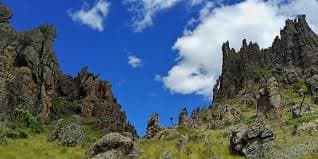
The Dragon’s Teeth formations are associated with the Satima area. If they appear in an itinerary, ask whether they are the main objective or part of a longer day.
A photograph of dramatic rocks tells you very little about the approach, ground conditions or time required.
Confirm whether the plan involves viewing the formations from a walking route or any scrambling. Do not assume that reaching a rock formation includes climbing it.
Before booking, ask: What terrain will we cross, and is any scrambling involved?
Shorter walks and highland stays
You do not need a summit target to enjoy the Aberdares.
Ask about a visit built around manageable guided walks, scenery and time to rest. The available options will depend on your accommodation, access arrangements and current conditions.
This can be a better starting point for mixed-ability groups or travellers who want an active break without making every day an endurance test.
The view does not check your fitness-tracker statistics before letting you enjoy it.
Day trip or multi-day escape?
A day trip can work when the chosen route, transport arrangements and walking time fit comfortably together.
Look at the full schedule:
- Departure and expected return time.
- Time spent in the vehicle.
- Entry and briefing arrangements.
- Walking time, including breaks.
- A realistic margin for delays.
A multi-day stay gives you more room to separate travel from activities and discuss alternatives if conditions change. It does not automatically make a demanding route easy, but it can make the overall trip feel less rushed.
For a starting point, explore our Aberdare Hills Nature Retreat. Discuss the walking options, accommodation and pace with us before booking.
A highland retreat should not be assumed to include a particular summit, technical route or camping expedition unless it is explicitly listed and confirmed.
What makes a mountain day feel difficult?
The conditions underfoot
Uneven, wet or muddy ground can slow a group considerably. A distance that feels straightforward on a familiar path may take much longer in different conditions.
Ask your guide about the route as it is now, rather than relying on a photograph taken during someone else’s visit.
The weather
Plan for changes in visibility, wind and rain. Check the forecast close to departure and ask how the operator decides whether to proceed, modify the route or postpone.
A forecast is useful information, not a contract with the mountain.
The altitude
High-elevation travel can cause altitude illness. Fitness does not replace a sensible ascent plan.
Discuss your itinerary with a healthcare professional if you have health concerns or limited experience at altitude. The CDC’s high-altitude travel guidance explains the importance of gradual ascent and recognising symptoms.
Tell your guide promptly about a new headache, nausea or unusual fatigue. Do not continue higher with symptoms of altitude illness. Worsening symptoms require descent; confusion, loss of coordination or breathlessness at rest call for urgent help.
The pace
An outing should be planned for the group taking part.
Ask about rest stops, turnaround decisions and support for someone who cannot continue. These arrangements should be clear before departure, rather than improvised halfway through the day.
What to pack for an Aberdare hike
Start with the operator’s route-specific kit list. Then check that you have the essentials for staying comfortable if the day becomes colder or wetter than expected.
Clothing and footwear
- Broken-in footwear with suitable grip.
- Comfortable walking clothes.
- A warm layer.
- Waterproof outer layers.
- Warm accessories appropriate to the forecast.
- Spare socks kept dry.
Water-resistant equipment and waterproof equipment are not always the same thing. Discovering the difference during heavy rain is an unnecessarily thorough product test.
In your day bag
- Drinking water, with refill arrangements confirmed.
- Food and snacks appropriate to the day.
- Personal medication.
- Sun protection.
- A charged phone.
- A headtorch.
- A small personal first-aid kit.
- Protection for electronics and dry clothing.
Walking poles can be useful if you are comfortable using them. They do not replace a guide’s judgement about unsuitable ground.
For a broader checklist, read our safari packing guide, then adapt it to the hiking instructions you receive.
For an overnight trip
Ask what the operator provides before buying or packing equipment.
Confirm sleeping arrangements, bedding or sleeping-bag requirements, meals, drinking water, toilets and how luggage is transported.
If camping is proposed, request the exact authorised location and booking arrangements. An attractive patch of ground is not automatically a campsite.
Guides, access and wildlife: confirm the arrangements
The Aberdare Range includes different access areas. Do not assume that one gate, permit or guiding arrangement covers every proposed route.
Before paying, request written confirmation of:
- The exact route and access point.
- Applicable entry and activity fees.
- Guide and any required ranger arrangements.
- Group size and support.
- Transport to and from the walking start.
- Emergency communication and evacuation planning.
- The approach to poor weather or route closure.
- Cancellation and rescheduling terms.
Current requirements should be checked with the relevant managing authority, including Kenya Wildlife Service where applicable.
Follow your guide’s instructions around wildlife and restricted areas. An offline map can help with orientation, but it does not establish permission to enter or tell you whether conditions are appropriate.
A few questions worth asking before you book
Is this suitable for a beginner?
Ask about the specific route, not the range as a whole.
Share your recent experience and request a realistic assessment of distance, ascent, altitude and terrain. A shorter guided outing may be a better introduction than a summit-focused day.
How long will the hike take?
Request an estimated range that includes breaks, along with the planned turnaround time.
Avoid treating another traveller’s fastest completion time as your itinerary. They may have had different conditions, a different starting point or a surprisingly urgent appointment with lunch.
Can we combine hiking with a more relaxed stay?
That is a useful option to discuss. Explain how much walking you want and whether your priority is scenery, a summit, photography or time away.
The final plan should identify the actual activities rather than simply promise “adventure.”
Can we do a multi-day traverse?
Ask for a detailed proposal covering the full route, permissions, overnight locations, water, equipment and evacuation arrangements.
Do not book from a route name alone. A traverse requires more planning than extending a day hike by a night or two.
Plan the experience, not just the summit photograph
A good Aberdare trip leaves room for the people taking it: their abilities, interests and reasons for being there.
Perhaps you want a challenging day with a clear objective. Perhaps you want misty landscapes, a satisfying walk and somewhere comfortable to spend the evening.
Both deserve a well-planned itinerary.
Request your personalised Aberdare itinerary and quote. Tell us your dates, group size, recent hiking experience and whether you prefer a day outing or a multi-day stay.
We’ll help discuss the options and what needs confirming before you commit. Bring your curiosity—and keep the snacks somewhere sensible.